Tag Archives: imagination

Testing & Grades Are Obsolete

“One looks back with gratitude to those teachers who touched our human feelings. The curriculum is so much necessary raw material, but warmth is the vital element for the soul of the child.”

– Carl Jung

This morning I saw an ad for an app called Cograder. In the advertisement, a teacher spoke directly to his colleagues, “I teach high school English in Colorado”… He complains about having no time to do anything personal because grading takes so long-until he discovered Cograder, his A.I. assistant. Rather than teachers using artificial intelligence to help them grade, further separating the relationship between teachers and students, I propose a completely different solution: Eliminate tests and grades.

For an educator to suggest doing away with tests and grades is tantamount to blasphemy. But I believe that it is vital at this juncture in time when the uses of artificial intelligence are increasing on every front, to take a very close look at how we teach now and what the expectations are for students to come. 

The current concept of how schools should be was devised during the Industrial Revolution. We are currently in the midst of a Technical Revolution. Just as at the beginning of the Industrial Revolution there was no way to conceive of what the future would bring, in a rapidly evolving technology explosion, it is equally, if not more, impossible to predict our future. However, there are some things that we do know, some things that do fit a current and future world’s needs.  As the modern world becomes more and more divided into us and them, there is a desperate need now for building relationships, social skills, critical thinking, and empathy. 

A.I is here, it will evolve as it will, and let’s hope it’s for the best, but more than ever in an increasingly technical world, teachers’ relationships with students need to be built on compassion and understanding of each and every student as a unique individual.

When I say that our schools would work much better if we did away with testing and grading, I do not mean to suggest that we lower teaching standards, quite the contrary.  What I mean is that we must offer an environment that actively encourages learning, an environment that supports the innate yearning to grow, to lean toward truth and understanding.

Testing, grades, awards for high achievers, etc, are designed to promote competition rather than excellence, orchestrated to encourage children not to make mistakes, to be ashamed of mistakes, and to avoid them at all costs. Yet just about every professional in the field of education agrees that thinking of mistakes as the perimeter of a students’ mastery of a concept, and using that benchmark to create a better path to increased understanding, is the very best way to learn.

An atmosphere of discouraging mistakes creates a class room of children who inhibit their creativity out of fear of being thought foolish. Essentially, students silence themselves. They do not feel free to follow the rabbit trails of connections that lead to true perception. Comprehension of new concepts is a process that involves curiosity, creativity, and an open mind. It takes place in an environment of trust. Mistakes in a classroom should be  seen as opportunities to learn, and children should be encouraged for thinking outside the standardized boundaries.

Testing is too often a stressful experience that leads not to true or lasting understanding, but short term memory, all night cramming, and sometimes, cheating. Cheating (which, ironically, may entail a student using A.I.) may seem a viable alternative to failing if mistakes bring your grade down, which could affect your final GPA, which could affect your admittance to a prestigious university, which could affect your ability to get a decent job, which could affect your entire life…ad nauseam. Even if these strictures once were true, technology is changing our lives so rapidly that they can no longer be true, as we have no idea what the future will require.

Rather than doing things as they have always been done, let’s ask the question: What do we want to achieve through education? Are we succeeding in these goals by training students to test well, at the expense of teaching them to think?

At the risk of sounding utopian, try to imagine a school in which a child is truly respected. Although we cannot know what the future holds, one thing we do know is that our children are the future. Let’s stop expecting them to go into the factory of our current education system and come out a fully formed human ready to follow all the rules. Instead, let’s encourage them to wonder, to explore, to be curious and caring individuals. Let’s teach the whole child, and this means truly seeing the individual student, being sensitive to the nuance of how each student expresses herself. This cannot be accomplished by feeding a child’s responses into a virtual assistant without capability of emotion or nuance.

What is needed now, what is vital,  are teachers who are more human, not less.

When AI tears up at hearing an old song, knows the heart ache of seeing children suffer in senseless wars, stares in wonder at the night sky, falls down on its knees awestruck by the splendor of it all, the magnificence, the marvel, and the miracle of this beautiful blue spinning planet, when this happens, I will consider changing my opinion. 

“When I say it’s you I like, I’m talking about that part of you that knows that life is far more than anything you can ever see or hear or touch. That deep part of you that allows you to stand for those things without which humankind cannot survive. Love that conquers hate, peace that rises triumphant over war, and justice that proves more powerful than greed.” 
-Mr. Rogers

The Lost Art of Nature Journaling

“Our society is much more interested in information than in wonder, in noise, rather than silence…And I feel that we need a lot more wonder and a lot more silence in our lives.” Mr. Fred Rogers

Nature Journaling, a popular pastime in the late 1800’s, has, like long walks, poetry, deep conversation, and, for children, playing outside from dawn to dusk, become a quaint thing of the past. Yet, nature journaling has a quiet power that is invaluable in our noisy world.

At the beginning of the Covid related lockdown while many people stayed inside with their computers, wildlife was returning to its long abandoned paths. Dolphins were seen playing in the Venice Canals of Italy, elephants wandered African freeways, and I, here in Southern California, watched a large mountain lion glide through my yard.

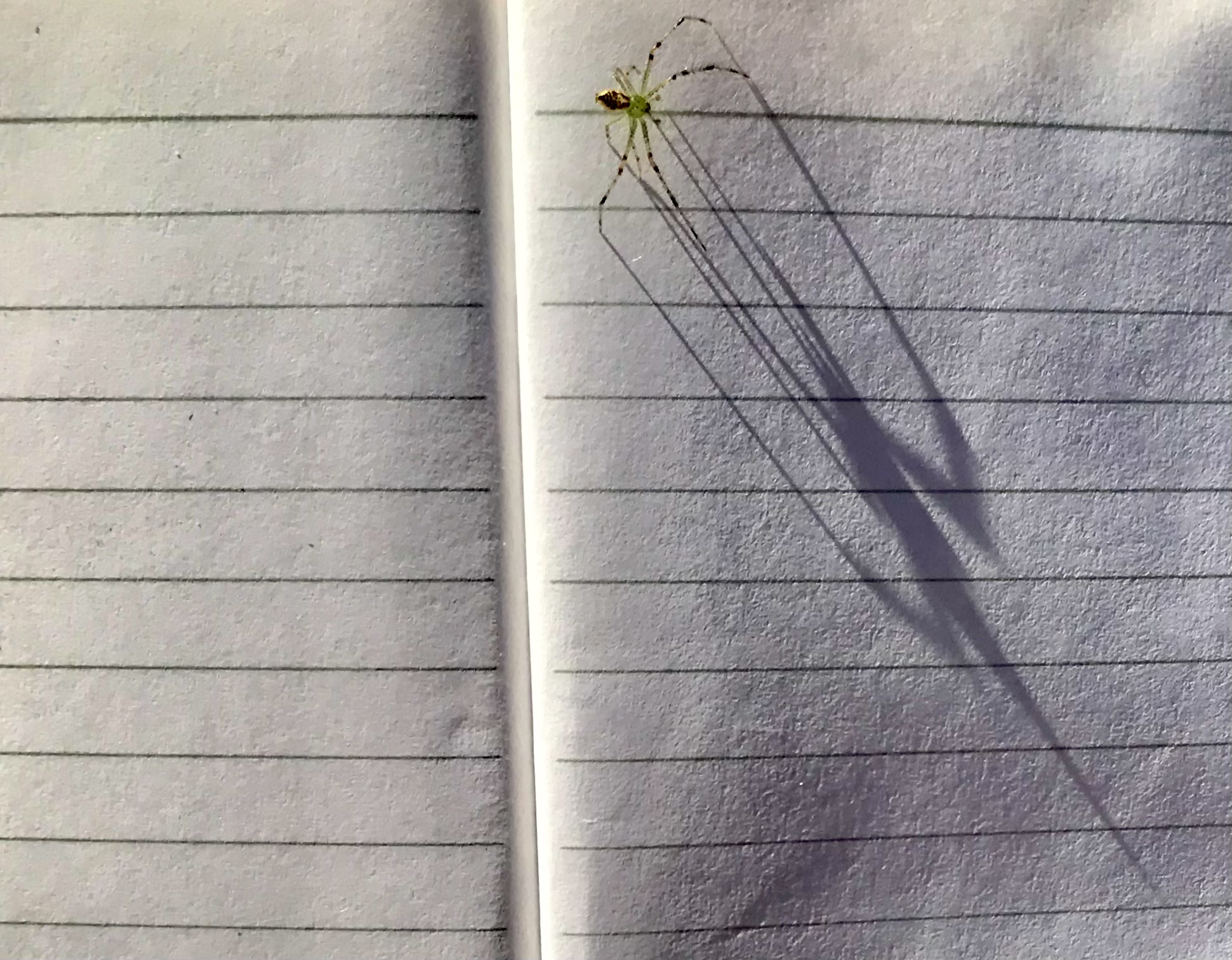
Nature Journaling needn’t be so dramatic. You don’t need to observe a hundred year old oak tree. A stalwart weed growing out of crack in a driveway can be as much a subject of wonder as any other.  Bees, crickets, ants, moths, snails, spiders, lizards, and dozens of birds busy themselves in their buzzing worlds, so mysterious to we humans. And yet, within all the mystery, do we not see ourselves in each and every living thing? Our bustling traffic, our structures, our language, our need for water, food, rest, and a flock of our own? The essential joy and truth revealed to us through the silent attention necessary to nature journaling is this…we are all intrinsically and beautifully connected. 

In the next few weeks try concentrating on becoming an observant naturalist. Pause and look at the world with respectful attention, all the while creating a journal that will be unique to you.

You will not need much…an inexpensive notebook to start. The best ones for nature journaling are spiral form so that the book can stay open in your lap or on the table. You want something that won’t be cumbersome to take with you on a walk. Find the size that you like, perhaps something that will fit in your everyday handbag. I work with 8 1/4” x 6 7/8” spiral books as a rule. A lined journal can work, if you tend to get wordy, but an unlined one is more traditional. Also put together a small pouch with a pencil or pen and several colored pencils, or watercolors.

Your journal will quickly become an extension of who you are. What is it, out of the proverbial “thousand things” that you observe? Why? In addition to your sketch, time, date, place, and weather, you may want to include a childhood memory, a poem that you love, even a dream, but all that a nature journal really needs is observations. So often people say that they can’t draw. Don’t let this concern you. My experience is that when you look at something carefully, you will surprise yourself at how well you draw. In the end, it is not about the photographic likeness, or the scientific name that the naturalists is after. It is about the reverence that comes upon you as your hand and heart connect when you try to draw the details of a spider web, a tiny flower, or a feather.

There is always something to observe when you begin to look with intention. And, when children see us journaling, they want to do it, too, guaranteed. Be ready with a notebook and box of crayons for them. For it is by modeling that we teach. It is by sitting quietly that we show our children, who, through no fault of their own, were born into an ever increasing fast paced technical world, how to appreciate the sun on their skin, the silhouette of a bird against a deep blue sky, and the soft grace of a butterfly.

In Support of Writing Your Own Spelling Words

 “If they give you ruled paper, write the other way.” 

Spanish poet Juan Ramon Jimenez 1881-1958

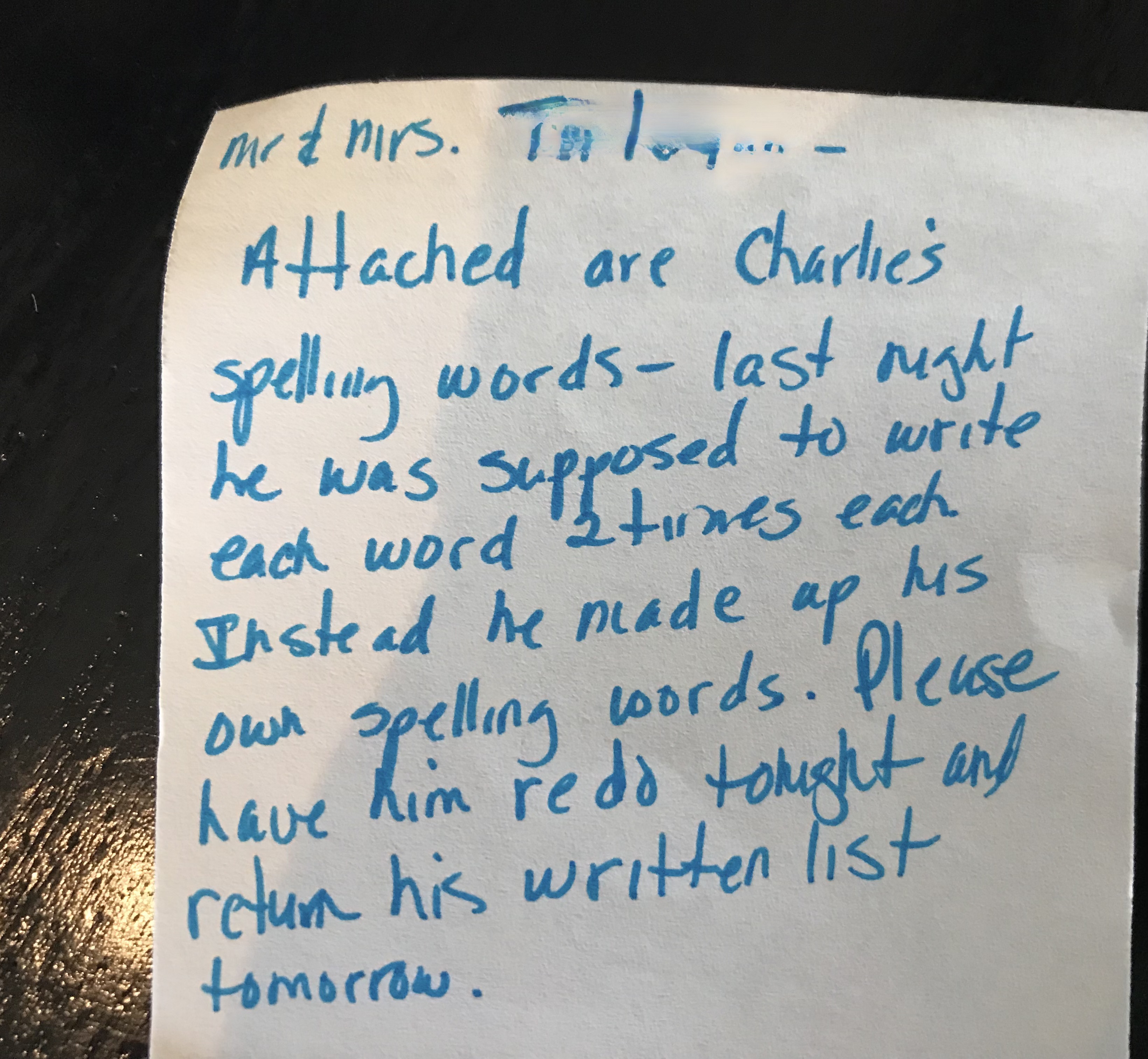
Sadly, our institutions of learning are often more rife with rules than with inspiring knowledge. The photograph below, (a teacher’s note found stuffed into the bottom of a Spiderman backpack along with a collection of old potato chips and small rocks) is an example of one student’s independent inventiveness in handling a homework assignment.

The world needs more Charlies. Those who ask why. Those who try it a different way. Perhaps, in the eyes of authority, it is not a better way, but how can you ever know if you are afraid to try? 

Schools have become brightly colored factories of fear rather than places of trust. Fear of bad grades, of tests, of not being smart enough, good enough, cool enough…not to mention the very real fear that many children suffer of being bullied. It is time to allow all students to grow in whatever rambling ways they will inside the halls of learning. Time to encourage the true seeds of knowledge – wonder, curiosity and the freedom to explore. Schools should not exist to clip wings, but to encourage flight. So, go ahead, make up your own words. And may they be wild and free enough to address an unknowable future.

The Power of Poetry

IMG_8030

copyright©donnaesgro

*

Poetry is often looked upon as irrelevant, a part of another era, when people had more leisure time, less distractions; when conversation was an art, and life wasn’t so frenetic. Yet, it is well documented by linguists that children who have early exposure to poetic verse and the phonemic and syllabic sensitivity it brings, have an easier time recognizing individual sounds and learning to read.

Poetry is the heartbeat of literature. Begin a rhyme in a room full of children and watch what happens…a sudden attentive stillness. Even babies, who can’t yet understand the meaning of the words, are entranced by the patterns, repetitions, and rhythms:

I am Sam

Sam I am

That Sam-I-am That Sam-I-am!

I do not like that Sam-I-am

Do you like 
green eggs and ham?

I do not like them, Sam-I-am.

I do not like 
green eggs and ham.

Dr. Seuss – Green Eggs and Ham

Rhyme draws attention to the ending sounds of individual words – alliteration to the beginning. The musical language of poetry rings and reverberates, creating in the child a fundamental joy in literature.

But should the reading of poetry end with nursery rhymes? The emotions that poetry evokes are universal. As children grow older, the reading and writing of poetry can help them to cope with vulnerable truths that are too fragile to share in other ways…love, pain, death, transcendence…feelings not likely to be discussed on social media.

Reading aloud one’s own poetry creates a forum for individual expression that inspires confidence and pride. To communicate profound feelings and see that others share them is a transporting experience. In a school system that stresses the head – test taking, memorization, grades, and competition – poetry celebrates the heart. In this increasingly homogenized culture, poetry’s power lies in its originality-whether wild with rage as in Allen Ginsberg’s Howl, or soft with the tenderness of e.e.cummings’ somewhere i have never travelled, gladly beyond, poetry connects us intimately and immediately to our deepest feelings.

The language of poetry encourages inventiveness with words. Hope is “the thing with feathers” (Emily Dickenson). Eyes are “the window to the soul”(Shakespeare). Poetry conjures images that broaden and enlighten the mind. Metaphor and simile invite the reader to look at life in different ways, using unexpected correlations that inspire creative thinking:

The fog comes

on little cat feet

It sits looking

over harbor and city

on silent haunches

and then moves on

Carl Sandburg – Fog

From the rocking rhythm of early lullabies to the healing strength of dirges, the simple truths of poetry cross all cultures, all boundaries. Introduce poetry early to share the wonder of words with your child, but don’t lose track of how poetry’s elegant, eloquent elucidation can inspire us throughout our life

Why Doing Absolutely Nothing is Important

IMG_1634

copyright©donnaesgro

*

“Not all those who wander are lost.”  J.R.R. Tolkien

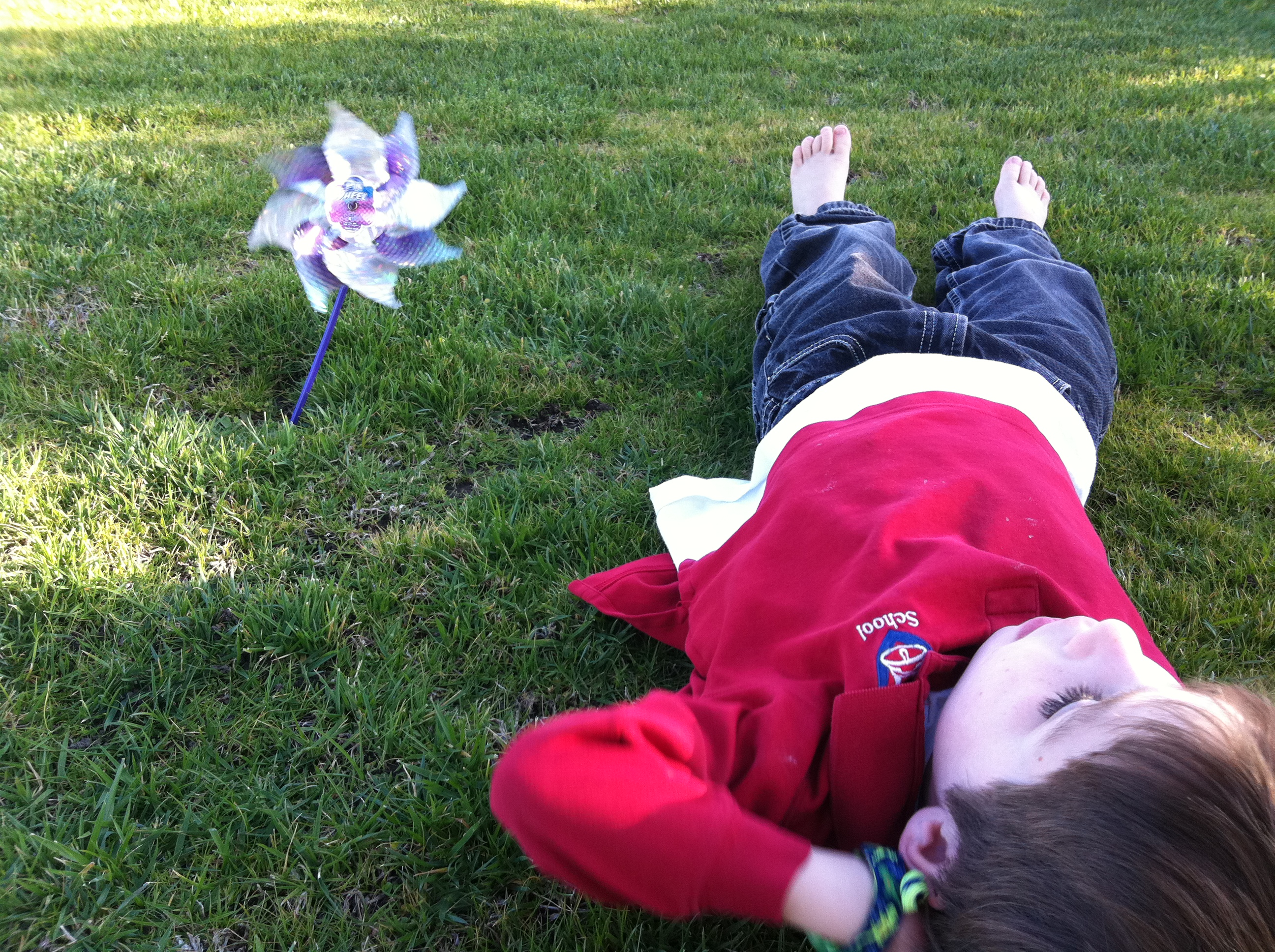
The modern world is a hectic one. Between school, sports, dance, music lessons, karate class, and other extra-curricular activities that fill our children’s days, there is precious little time for them to be alone with their thoughts. To be alone with one’s thoughts is to let the mind wander…to imagine. When the brain is free of distractions thoughts become reflective, and unexpected connections are made that expand consciousness.

Daydreaming enables us to revisit our memories. Allowing time to process these intricate emotions leads to deeper understanding of ourselves and others. When children are given the time to ponder they begin to take leaps from what they know to what they don’t know. Often, these original ideas are sweet, innocent, or funny…but they are, unmistakably, inventive, and show the developing mind at work.

When a child daydreams, no one can intrude on his fanciful imaginings. He is free to explore, to make unique, whimsical associations that are the seeds of creative thinking. We live in a culture that values productivity, but, ironically, frowns upon the very dreamers who are the gateways to inspiration and invention. Einstein said, “The intuitive mind is a sacred gift; the rational mind is a faithful servant. We have a society that honors the servant and has forgotten the gift.”

It is not only composers or poets who benefit from daydreaming, but scientists, mathematicians, and engineers as well. MRI research has revealed that, during a daydream, areas in the brain associated with complex problem solving are activated. Scientists now believe that daydreaming is as important as the dreaming we do at night – a time when the brain works hard to coalesce and consolidate learning. Neuroscientist and human development psychologist, Mary Helen Immordino-Yang, in an article in the journal Perspectives on Psychological Science, states that daydreaming is vital to learning, ultimately strengthening cognitive abilities such as reading comprehension:

Daydreams can reveal truths that are not visible in the too bright light of everyday activities. Like a candle, or a star, they can help to lead us in the right direction. Let daydreams inspire your children. In a world that shouts for their attention, encourage and respect these quiet, thoughtful moments. Let’s teach our children to value the beauty of silence and their own fantastical inner worlds.

Read for Health

IMG_2515

copyright©donnaesgro

*

While no good parent would feed a child nothing but junk food, unfortunately, many parents do not pay attention to what their child is ingesting through the seemingly always accessible electronic media. We all know that entertainment has become increasingly violent. It is not as often addressed that it has become alarmingly superficial and mean spirited. If a child is being fed these messages for many hours a day it becomes a daunting task to undo the damage. The average American child uses some kind of electronic device for 7 hours a day while the American Academy of Pediatrics recommends no more than one hour per day for 3 to 5 year olds, two hours for 6 to 18 year olds, and none at all for children under the age of two.

Studies show that immoderate use of television and video games lead to attention deficits, anxiety, and difficulty with concentration. It is very important that parents monitor the time and the quality of all electronics their child is engaged in. Take the time to determine if your child, through this media, is being encouraged to develop the kind of character traits that you hope she will begin to emulate.

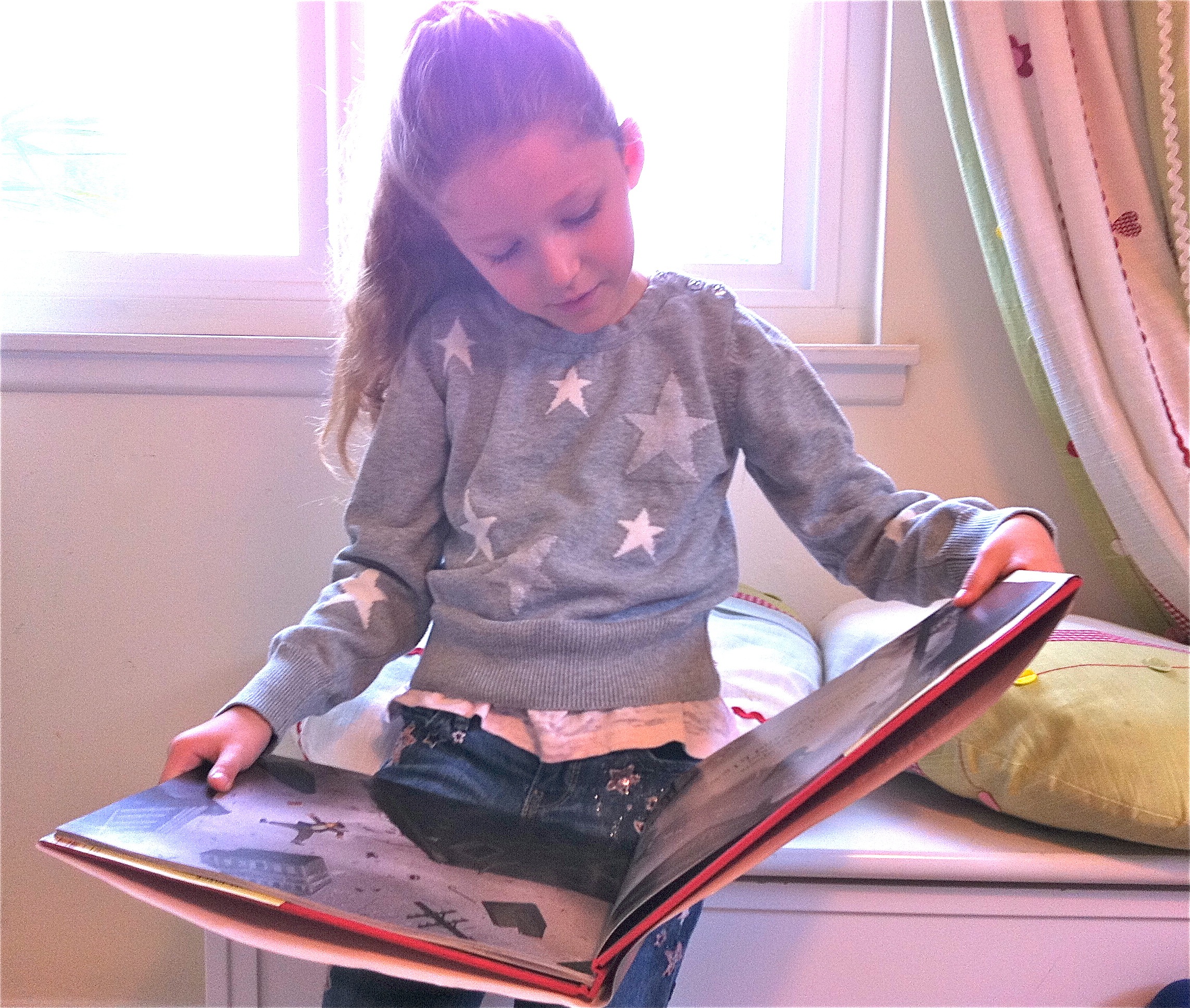
Books offer a respite against the frenetic world of electronic entertainment. They introduce characters that are more than just vehicles designed for bouts of combat. Books slow your child down and increase his attention span. They nurture imagination and creativity and, unlike passive screen time, make demands on your child to think deeply. They are an important part of a healthy diet for your child’s mind.

Words Connect Us

copyright©donnaesgro

*

The phrase “Use your words” in relation to encouraging children to express themselves has been around long enough to have become an iconic idiom. Normally it is used in conjunction with reminding a child that hitting, biting, throwing one’s self on the floor, etc….are not effective ways to communicate. But have you ever thought about saying to a child who is behaving properly,“Use your words”?

This blog is about the importance of establishing a love of literature early in life and the connection that reading has to the developing mind. Curiosity, creative thinking, imagination, attention span, and even social skills are all heightened through early exposure to books. Words connect us. Conversations, whether with a 3 year old or an 80 year old, inspire us and help us to see from different perspectives.

After all, what are books if not voices on the page…voices communicating stories to anyone who cares to listen. The author’s voice may tell stories of fairies, baby animals, princesses, dragon fighting, how to make a kite, or what lives under the sea…whether fiction or non-fiction, a book explores new thoughts that expand the heart as well as the mind.

All day long children are bombarded with peer pressure, expectations to perform, to obey, to excel, to be quiet when they feel like talking, to talk when they feel like being quiet. They are enticed with glossy packaging and advertisements designed to convince them that happiness lies in material possessions. Reading is free of all that. A book takes a child to a simpler, less intrusive  world. It sets their mind to dreaming and makes them smart.

What a beautiful gift to give a child, and it is as simple as using your words.