Category Archives: Literacy

Reading is Cool

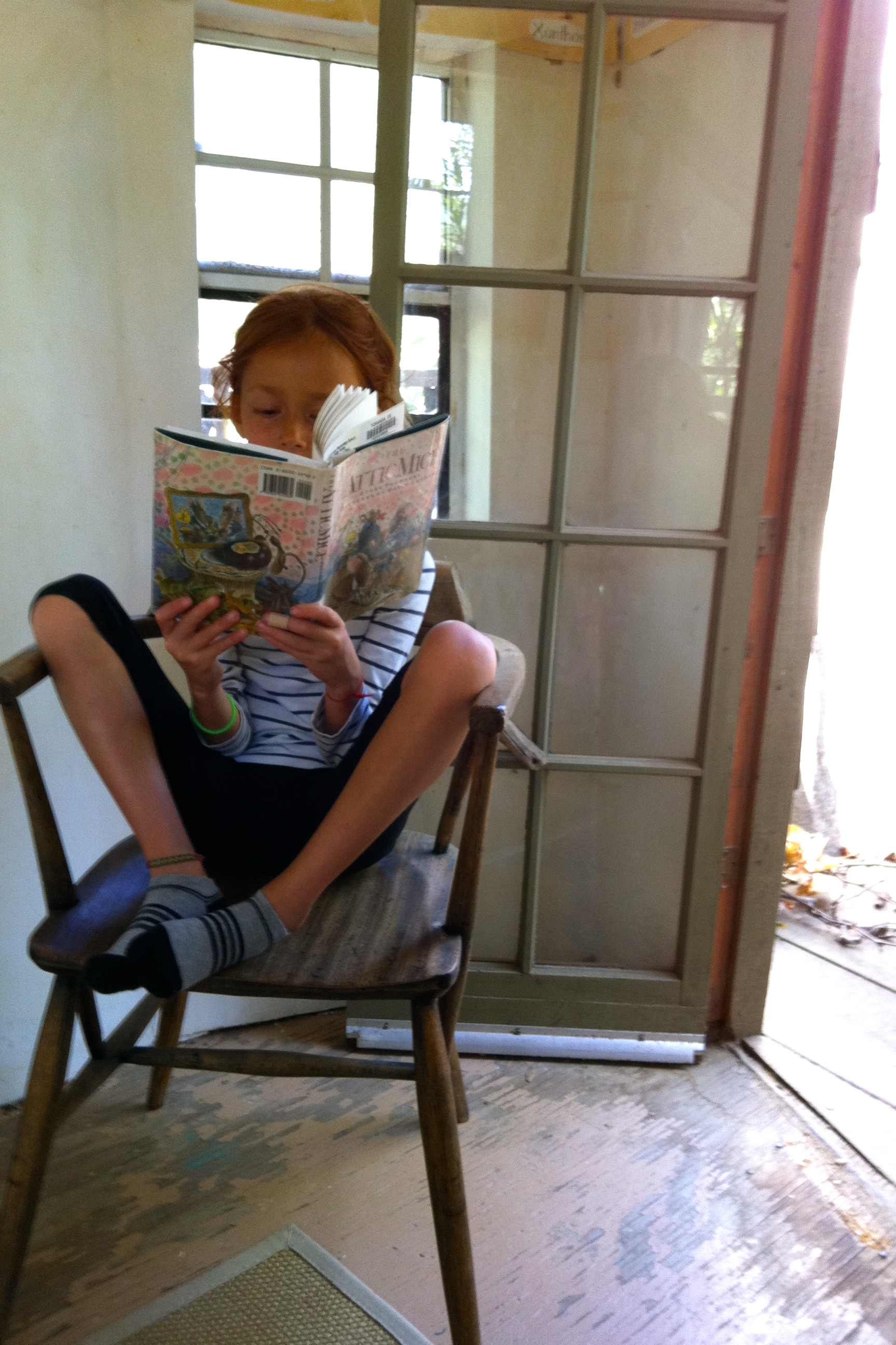
IMG_9924

©donnaesgro

“When I read Rimbaud’s works, the bells went off.”    -Bob Dylan

*

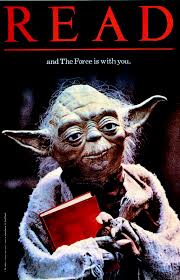
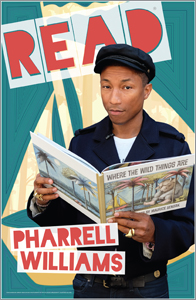
Reading is not something that can be measured by a standardized test. Reading is unique, it is universal, and it is cool. Ask Jack Kerouac, if you don’t believe me. From William Blake to Sherman Alexie – It is very hip to be literary.

In her memoir, Just Kids, the iconic rock star Patti Smith speaks fondly of her love of old book stores and states that the 19th Century classical poets Rimbaud and Baudelaire have been keen sources of inspiration in her work.

Bob Dylan, vagabond of cool, was influenced in his writing by such philosophers of literature as Ferlinghetti and Bertolt Brecht.

The 80 year old Dalai Lama, scholar of Buddhist scripture, and Noble Peace Prize recipient, is globally recognized as having a “cool factor”. This highly erudite man can recite arcane Buddhist texts from memory.

Writer, musician, actor, performance artist, painter, and Renaissance Man, David Bowie, was frequently found browsing the famous New York book stores McNally Jackson and The Strand. Bowie felt so passionately about reading that he posted 100 of his favorite books on his website. The list includes such literary works as Anthony Burgess’ A Clockwork Orange and Juno Diaz’ The Brief Wondrous Life of Oscar Wao

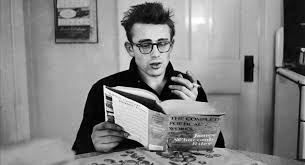
 The original rebel without a cause, James Dean, the young man that made motorcycle jackets the uniform of cool, was an avid reader. Knowing how much he loved Antoine De Saint-Exupery’s The Little Prince, a close friend chose a quote from the book, “What is essential is invisible to the eye.” for Dean’s memorial plaque near the scene of his tragic automobile crash.
images-1 copy

©Dennis Stock/Magnum Photos

In Cyrano de Bergerac, the beautiful Rosalind falls in love with the poet, not the handsome pretender – that is the tragedy and truth of this wondrous play. Being well read makes you attractive, interesting, and desirable to the opposite sex. Pretty Cool!

*

A reader is an explorer, a seeker, a visionary. One on a quest for something deeper, truer, stronger and more meaningful than what modern culture can offer. Readers are not content with status quo. This makes them defacto non conformists-quintessentially cool. They do not measure truth by what is currently popular. Readers are curious, passionate people with hearts full of wonder. They have discovered that books are passageways.

When teenagers are asked “What is cool?” One character trait comes up consistently:

Independence

Throughout history an important theme in literature, whether for children or adults, is the importance of standing up for what you believe in, even when you stand alone.

The Oxford dictionary defines “radical” as “essential and fundamental”, Malala Yousatzai, the young radical who wrote I am Malala, one of the coolest young women in the world, speaks out in her autobiography about how she risked her life for the right of every one to be allowed an education, no matter what sex they are born into.

Role models do not necessarily have to be living. Characters, whether in fairy tales or novels have the ability to help people make transformative decisions; have the power to remind us to treat one another with empathy, decency, and without exploitation.

When reading to a child about characters who are strong and honorable, who courageously choose good over evil, who forge their own path and are triumphant, we offer a compass with which to navigate. The enhanced empathy that early readers acquire helps make them leaders, not followers, as they mature. Good books can teach us to be more compassionate and humane, can encourage us to fight for a kinder, wiser world- that is cool.

Even those with aware, informed, open minded, and educated families cannot possibly be exposed to all the ideas and ways of seeing that books can offer. Books are the ultimate autodidactic key to knowledge. In many dystopian novels, the banning of printed material is both a symbol and a warning of not only the loss of freedom, but a certain kind of imprisonment without bars – the imprisonment of only being allowed to think what those in charge allow you to think. To be illiterate is to be suppressed, as Mahala knew well.

“You don’t have to burn books to destroy a culture. Just get people to stop reading them.” Ray Bradbury – Fahrenheit 451

Only thorough education, through knowledge (and this is attainable not only through formal schooling – but through the vast stores of historical material both fiction and nonfiction available to all of us in free countries) do we gain the power to accept or reject the status quo, do we gain the strength that allows us to make important changes in this world. Reading is a right and a privilege, and should not be taken lightly. Teachers have an obligation to let their students in on the value of this precious resource, and not to let the loud circus of modern technology drown out the power of a book’s soft whisper in the darkness.

Books (the old fashioned paper kind) are almost the only activity left that doesn’t require technology or specialized equipment. They are also one of the only places you can escape to in which you not only don’t have to spend any money, but won’t be bombarded with advertisements for things you can’t possibly live without.

In a world obsessed with speed, in which people are more often treated as consumers than not, reading requires that you sit down and slow down and it has nothing to sell. Become reflective. Choose your companion for the night, whether it be Holden Caufield, Titania- Queen of Fairies, or Charlotte the spider.

Reading opens up our hearts and minds. We fall in love with characters because of how they think and how they feel, not because of how they look or what they wear. Books express universal feelings, and yet are deeply personal-no one imagines the same pictures when they read. At a time when we are most lonely, books remind us that we are not alone. They teach humbleness, authenticity, connectiveness, and encourage us to dream – all very, very cool traits.

*

You can never in a lifetime read all the books you want to read. But if you’d like some of the “coolest” to start with, here you go: A link to the 100 best books for children chosen by the NY Public Library:

http://www.nypl.org/childrens100
 

 Unknown-3images-1PharrellWilliams_Poster_300

©AmericanLibraryAssociation

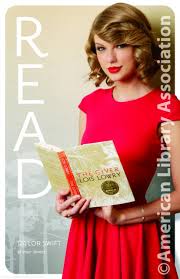
 “If we encounter a man of rare intellect, we should ask him what books he reads.”

-Ralph Waldo Emerson

Books vs. Bullies

kid dwg 2002 copy-2 3

copyright©donnaesgro

*

Walk as though you’ve been given one brown eye and one blue

Body & Soul…Charles Wright

***

Bullying is a complicated socio-psychological issue. Bullies have always been among us in one form or another, but with the advent of the internet and the unprecedented prevalence of teenage texting it has reached pandemic, twenty four hour a day, proportions. The heart breaking stories of teen suicides brought on by severe cyber bullying have shocked and wounded us all and served to create a keen cultural awareness of the seriousness of bullying. Many articles have been published on the subject, programs implemented in schools, and anti-bullying laws put in place. Yet, statistics show that these interventions have little effect on day to day bullying in the playgrounds and corridors of our schools.

If aggression is part of human nature, then so is empathy. Bullies are made, not born. Our society, as a whole, needs to take responsibility for having created a culture in which bullying exists in every middle and high school in the country. How do we reinforce the empathetic nature in our children and discourage the aggression in a milieu that justifies violence as entertainment, is fascinated by power, sees mean spiritedness as humor, and glorifies only a certain body type as attractive?

I believe that when home and preschool environments value, teach, and practice kindness a foundation that prevents bullying later in life can be built.

Normal behavior at the preschool level involves constant experimentation on how to get along with others. Although children have an innate desire to make friends they must learn how to do so. Anyone with a toddler knows that basic social skills, such as sharing or waiting for your turn do not come naturally or easily, yet, even very young children enjoy being around their peers and overflow with affection for others. Children learn by imitation, following the lead of parents, teachers, and older siblings. Modeling thoughtful words and actions is extremely important, but there is more-attention needs to be paid to raising a child with a strong sense of self worth. Bullies are able to hold power in an ambiance of hierarchy and fear. Feeling powerless themselves, they prey on those who they sense can be intimidated.

At the earliest stages of a child’s life, there should be a concerted effort to create an atmosphere of respect that values each and every living creature precisely for their unique qualities; an atmosphere that not only appreciates others but that also honors the self.

“Today you are you, that is truer than true. There is no one alive who is youer than you.” Dr. Seuss, Happy Birthday to You!

Books can be extremely helpful in fostering a climate that encourages reflection and instills empathy. Who doesn’t suffer with the ugly duckling or feel angry at the mean swans? In both fairy and modern tales the most important quality, and one not lost on the child, is character. There is a great power in language, and reading to your child is a wonderful way to fill their hearts with caring. There is no need to focus only on books that specifically address bullying (and there are many fine ones for all ages). Books that address diversity such as David McKee’s Elmer the Elephant, champion courage, like Watty Piper’s classic, The Little Engine That Could, or promote individuality as in Kevin Henkes’ Chrysanthemum, help children understand that being little does not mean being incapable and being different does not mean being an outcast. Books of this nature are helpful in beginning conversations that allow the child to examine and express feelings difficult to articulate.

Unconscionably, studies show that children with disabilities are two to three times more likely to be victims of chronic bullying directly related to their disability. (Marshal,Kendall, Banks, & Gover (Eds.) 2009). It is a short distance from being bullied to bullying one’s self: I’m ugly, I’m fat, I’m gross, I’m worthless..words that become a endless reel in the victim’s mind, leading to anxiety, anorexia, depression and other unbalanced emotional states. When parents and teachers cultivate an awareness of others, and introduce an early exposure to people of all colors, ideas, cultures, and disabilities, they are planting the seeds of empathy. While it may be difficult to expose a very young child to this broad family of man, books can take us all over the world, through time and space, and into the thoughts and feelings of a vast diversity of people.

30% of all school age children are either bullies or bullied while 70% look the other way. More than half of all bullying situations stop when a peer intervenes on behalf of the student being bullied. (Hawkins, Pepler, and Craig, 2001) The statistics speak for themselves. Bullying is a cultural phenomenon. There is tremendous strength in the 70%. Let’s raise our children to be courageous, to speak up for injustice. We may not be able to change the reality of bullying, but we can work, from the very beginning, to raise empathetic children, with a sense of individual pride and dignity who will use their 70% majority to speak up for what is right-beginning in the school corridors, and spreading from there out into the world.

Learning to Listen

IMG_8190

copyright©donnaesgro

*

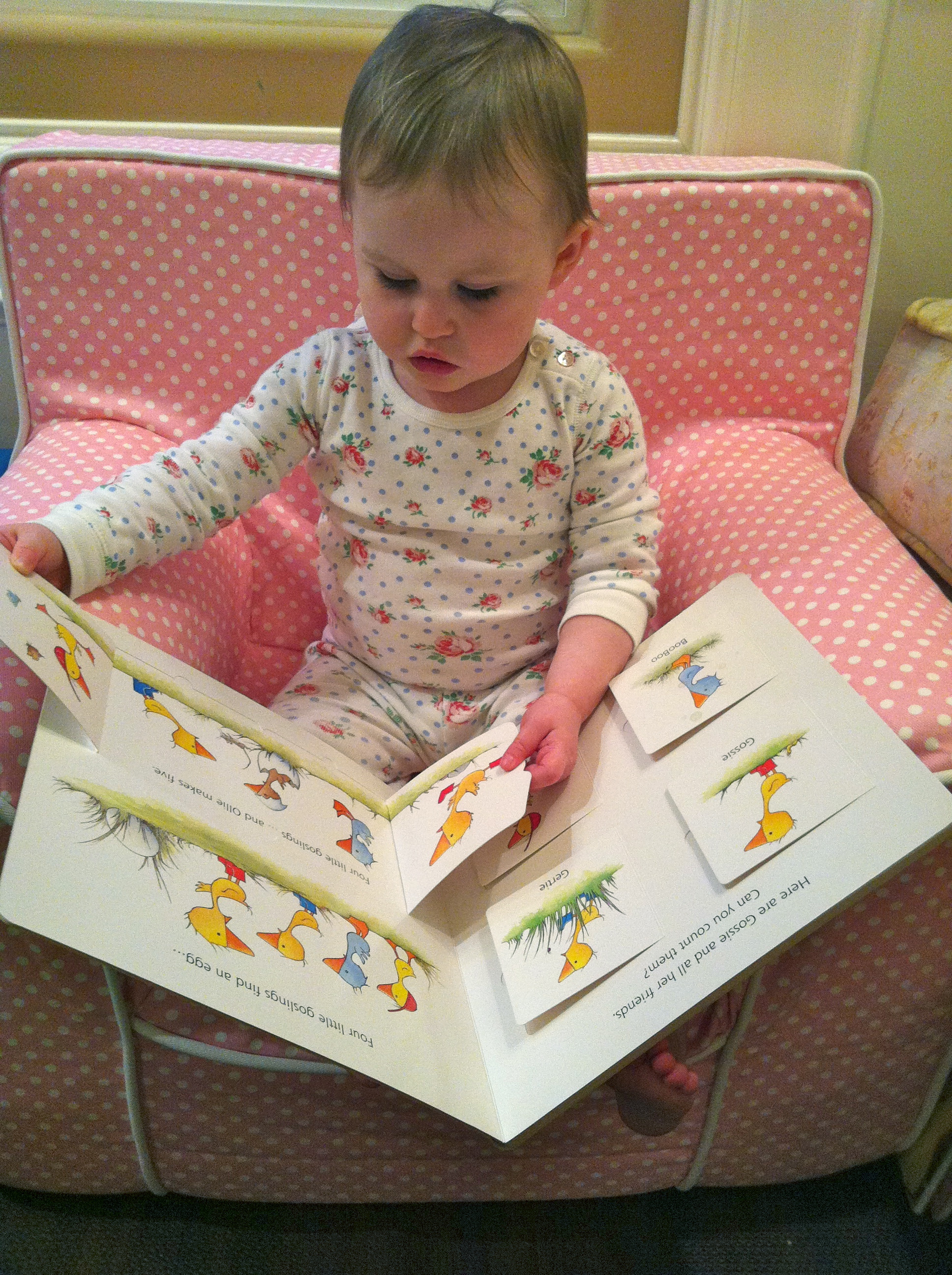
A child must learn to listen before he can listen to learn. Experts agree that the conditions which most affect  literacy take place in the home, long before a child enters school. Children listen, understand, and speak before they read, write, and spell. Without the former, the latter is impossible. It follows that the more developed a very young child’s language skills, the easier time he will have learning the academics of literacy. Reading to your child from the very beginning will help develop listening skills that are invaluable later in life. At first your active baby won’t have the attention span to allow you to read all the words of a book to her, but just sitting together enjoying books, talking about the illustrations, is enough to start. As time goes by, a young child who has access to a bookshelf will soon be seeking out books and sitting quietly pretending to read. This activity is not, simply, adorable. For a child, the act of pretending is a major step in learning a new skill.

In order to help a child learn to listen, keep the home environment as free of unnecessary distraction as possible. Turn off the background noise. This simple act will help to create a more peaceful atmosphere conducive to contemplation…and to reading. Music is not usually a distraction, but the news and commercials that accompany radio and television certainly are. Children are sensitive and their hearing is acute, try to shield them from the constant advertising and, more importantly, the disturbing violent events that are, sadly, so often in the news.

Another aspect in teaching children to learn to listen is to listen to them! The respect that you show when you pay careful attention to a child’s stories and questions teaches him the importance of listening. Ask interactive, open-ended questions that offer the child not only an opportunity to express himself but to develop cognitive skills. Avoid “baby talk” or talking down to a child. Children love “big” words; adults often underestimate their insatiable curiosity and innate ability to learn them. Books add a multitude of new words not used in daily life that enrich and enlarge your child’s vocabulary exponentially. The art of thoughtful listening is fast becoming obsolete. Help your child become attentive in a culture rife with sound bite  and the abbreviated language of texting. It is only in listening closely that we truly learn.

*

“The word ‘listen’ contains the same letters as the word ‘silent’.”  -Alfred Brendel, composer

The Power of Poetry

IMG_8030

copyright©donnaesgro

*

Poetry is often looked upon as irrelevant, a part of another era, when people had more leisure time, less distractions; when conversation was an art, and life wasn’t so frenetic. Yet, it is well documented by linguists that children who have early exposure to poetic verse and the phonemic and syllabic sensitivity it brings, have an easier time recognizing individual sounds and learning to read.

Poetry is the heartbeat of literature. Begin a rhyme in a room full of children and watch what happens…a sudden attentive stillness. Even babies, who can’t yet understand the meaning of the words, are entranced by the patterns, repetitions, and rhythms:

I am Sam

Sam I am

That Sam-I-am That Sam-I-am!

I do not like that Sam-I-am

Do you like 
green eggs and ham?

I do not like them, Sam-I-am.

I do not like 
green eggs and ham.

Dr. Seuss – Green Eggs and Ham

Rhyme draws attention to the ending sounds of individual words – alliteration to the beginning. The musical language of poetry rings and reverberates, creating in the child a fundamental joy in literature.

But should the reading of poetry end with nursery rhymes? The emotions that poetry evokes are universal. As children grow older, the reading and writing of poetry can help them to cope with vulnerable truths that are too fragile to share in other ways…love, pain, death, transcendence…feelings not likely to be discussed on social media.

Reading aloud one’s own poetry creates a forum for individual expression that inspires confidence and pride. To communicate profound feelings and see that others share them is a transporting experience. In a school system that stresses the head – test taking, memorization, grades, and competition – poetry celebrates the heart. In this increasingly homogenized culture, poetry’s power lies in its originality-whether wild with rage as in Allen Ginsberg’s Howl, or soft with the tenderness of e.e.cummings’ somewhere i have never travelled, gladly beyond, poetry connects us intimately and immediately to our deepest feelings.

The language of poetry encourages inventiveness with words. Hope is “the thing with feathers” (Emily Dickenson). Eyes are “the window to the soul”(Shakespeare). Poetry conjures images that broaden and enlighten the mind. Metaphor and simile invite the reader to look at life in different ways, using unexpected correlations that inspire creative thinking:

The fog comes

on little cat feet

It sits looking

over harbor and city

on silent haunches

and then moves on

Carl Sandburg – Fog

From the rocking rhythm of early lullabies to the healing strength of dirges, the simple truths of poetry cross all cultures, all boundaries. Introduce poetry early to share the wonder of words with your child, but don’t lose track of how poetry’s elegant, eloquent elucidation can inspire us throughout our life

Literacy – How it Begins

IMG_6165

copyright©donnaesgro

*

“The invariable mark of wisdom is to see the miraculous in the common.”

― Ralph Waldo Emerson

Oral language is the foundation of literacy. Within a few short months an infant’s cries become babbles, then, suddenly, talking! Soon, the young child understands the meaning of thousands of words. The acquisition of language happens at a remarkable speed. Every time a child learns something new, it becomes a part of his knowledge base. Since words are simply articulations of concepts and feelings, it is evident that a child’s vocabulary should be measured not by how many words he knows, but by what he knows about each word.

The more ideas that the child is exposed to, the deeper her understanding of certain terms: A child whose favorite book is Goodnight Moon understands the conception of the moon in a more visceral way once she has seen a bright full moonrise, or watched the moon disappear behind a cloud lined with silver. Thereafter, whenever the book is read to her, these images flood her mind allowing a richer appreciation of both the word moon and the familiar bedtime story.

One of the most giving words in the English language is the word, “Look!” When you invite a child to look, you give him the gift of your time, attention, and awareness. You joyfully invite him to join in a shared experience and with this simple word illustrate how communication bonds us. “Look! A dragonfly!” Fills the child’s mind with dragons, butterflies, fairies… “Can it breathe fire?” I have been asked. These opportunities to enlarge your child’s perspective happen daily, and books are a wonderful way to extend this rapid accumulation of knowledge. While the opportunity to see a rainbow doesn’t happen everyday, books, both fiction and non-fiction, can share the beautiful imagery of a rainbow with your child, reinforcing such basics as color recognition, but more importantly, encouraging him to see the wonder and glory of the natural world…and to look for rainbows everywhere.

Children are born scientists – curious and eager to explore. Knowledge is not a mere collection of facts, it is alive, pulsing-a process of discovery. Books provide an access to worlds that we cannot, otherwise, enter. From the bioluminescent depths of the sea to the mystical outer edges of the known universe, books satisfy the need and the love for communication that begins with the infant’s first cries.

Is an E-Book as Good for Your Child as a Traditional Book?

Mother and Child Reading Frederick Warren Freer 1849-1908
Mother and Child Reading
Frederick Warren Freer
1849-1908

*

There are many delightful depictions of stories available electronically.But are they as worthwhile to your child as reading a traditional book? Childhood Development experts have not yet determined the answer to this question due to the fact that e-books have not been around long enough to collect the data necessary to come to a decision. The topic is of high interest to educators worldwide, and numerous studies have been conducted.

At best, reading to a child is not a static activity. Children feel warm, secure, and loved sitting next to a parent or grandparent with a book. They receive a not so subliminal message that books are valuable, and that so are they. This feeling can last a lifetime, conjuring pleasant and joyful memories associated with books.

Even very young children learn quickly how a book works; front to back, page to page, top to bottom. They see as they follow the story, that those strange shapes called letters have something to do with spoken words. More importantly, they are not distracted by the bells and whistles designed to enhance the e-book experience, they are free to comment, to ask questions, to ponder new ideas and make connections. The adult reader can extend these connections and make them personal. “Remember when we went to the zoo like Curious George?” “Was the lion scary?” “How many monkeys are in the tree?” “What colors are the flowers?” There are countless ways to extend even the simplest of books.

Only the parent knows the child’s most passionate interests. If your child is fascinated by anything from the solar system to insects, you can use this knowledge to make the book that you are reading a more interesting and individual experience….an illustration of a butterfly can lead to a conversation about metamorphosis, and, more importantly, it can lead you outside…to look for butterflies, to talk about what butterflies like…”Do they like snow or sunshine?” “Do they like gardens or city streets?” “Do you think that they would like to be caught and put in a box?” “Why?” Fiction leads naturally to non-fiction. There are a multitude of beautifully photographed scientific books for children. I like the ACORN series, published by Capstone Global Library, because it works equally well for toddlers as early readers.

E-books have their place, but use them sparingly. I see so many children sitting in shopping carts or at restaurants with their brightly colored devices. Perhaps these children are mostly watching high quality applications. But, they are missing their community – the myriad opportunities for language that present themselves outside of the home, starting with, simply, conversation.

Reading is not only about being entertained. A child can learn much about nutrition from seeing you read the ingredients of a cereal box. He can learn about choices, and how you used reading to make them. Most importantly, your child is present in the real world rather than a virtual one, absorbing, as children so readily do, the connections between the words they see everywhere, from street signs to menus, and how they are used to communicate important information.

*

“I immediately felt a sense of nostalgia that I haven’t felt in a long time. The scent of physical books—the paper, the ink, the glue—can conjure up memories of a summer day spent reading on a beach, a fall afternoon in a coffee shop, or an overstuffed chair by a fireplace as rain patters on a windowsill.”

New York Times Tech Blogger – Nick Bilton-on wandering into a West Village bookstore.

Read for Health

IMG_2515

copyright©donnaesgro

*

While no good parent would feed a child nothing but junk food, unfortunately, many parents do not pay attention to what their child is ingesting through the seemingly always accessible electronic media. We all know that entertainment has become increasingly violent. It is not as often addressed that it has become alarmingly superficial and mean spirited. If a child is being fed these messages for many hours a day it becomes a daunting task to undo the damage. The average American child uses some kind of electronic device for 7 hours a day while the American Academy of Pediatrics recommends no more than one hour per day for 3 to 5 year olds, two hours for 6 to 18 year olds, and none at all for children under the age of two.

Studies show that immoderate use of television and video games lead to attention deficits, anxiety, and difficulty with concentration. It is very important that parents monitor the time and the quality of all electronics their child is engaged in. Take the time to determine if your child, through this media, is being encouraged to develop the kind of character traits that you hope she will begin to emulate.

Books offer a respite against the frenetic world of electronic entertainment. They introduce characters that are more than just vehicles designed for bouts of combat. Books slow your child down and increase his attention span. They nurture imagination and creativity and, unlike passive screen time, make demands on your child to think deeply. They are an important part of a healthy diet for your child’s mind.

How Fiction Helps a Child to Develop Empathy

blogimage_joy_elephants

copyright©donnaesgro

*

Anyone who has read to a child has noticed the range of emotions that cross the child’s face as he listens raptly to a story. Worldwide, scientific researchers in the field of neuroscience have uncovered irrefutable proof that those who read fiction regularly develop a deeper understanding of others, which leads to the ability to see situations from different points of view – the quality of empathy.

Of particular interest is a study by Dr. Raymond Mar, a psychologist at York University, using preschool children. He and his colleagues discovered a direct corollary between how much a child is read to and the child’s Theory of Mind. Theory of Mind (ToM) is the ability of an individual to understand his or her own mental states, and to realize that others also have minds with perhaps different beliefs and desires. It is believed that ToM is an innate quality in human beings that generally takes many years of social interaction to develop. Having a keen sense of ToM is an abstract quality, and while children learn more readily with their senses, understand the concrete, and live in the present, reading about other’s thoughts and feelings helps a child to take the leap from the actual to the abstract.

We laugh at characters who are silly, but we also feel concern for characters who are sad, lonely, afraid, or hurt. A child, while reading, “practices” these feelings, acquiring an early knowledge of compassion. In a book such as The Rainbow Fish, children are exposed to the idea of sharing versus not sharing. How does it make you feel when you share? When someone shares with you? When someone doesn’t share with you? Books can evoke powerful emotions that children can safely and securely contend with, creating a sensitivity to emotional nuance often missed in the heat of the argument over whose turn it is.

Stories help a child to learn that sad feelings can be soothed, that happy feelings can be shared, and that these feelings are universal. We all celebrate, over and over again as we reread, that Harold, wielding only a purple crayon, will figure out all by himself how to get home safely, that the little blue engine will make it up and over the hill, and that wicked witches can be defeated by little girls in sparkly shoes.

Words Connect Us

copyright©donnaesgro

*

The phrase “Use your words” in relation to encouraging children to express themselves has been around long enough to have become an iconic idiom. Normally it is used in conjunction with reminding a child that hitting, biting, throwing one’s self on the floor, etc….are not effective ways to communicate. But have you ever thought about saying to a child who is behaving properly,“Use your words”?

This blog is about the importance of establishing a love of literature early in life and the connection that reading has to the developing mind. Curiosity, creative thinking, imagination, attention span, and even social skills are all heightened through early exposure to books. Words connect us. Conversations, whether with a 3 year old or an 80 year old, inspire us and help us to see from different perspectives.

After all, what are books if not voices on the page…voices communicating stories to anyone who cares to listen. The author’s voice may tell stories of fairies, baby animals, princesses, dragon fighting, how to make a kite, or what lives under the sea…whether fiction or non-fiction, a book explores new thoughts that expand the heart as well as the mind.

All day long children are bombarded with peer pressure, expectations to perform, to obey, to excel, to be quiet when they feel like talking, to talk when they feel like being quiet. They are enticed with glossy packaging and advertisements designed to convince them that happiness lies in material possessions. Reading is free of all that. A book takes a child to a simpler, less intrusive  world. It sets their mind to dreaming and makes them smart.

What a beautiful gift to give a child, and it is as simple as using your words.